Writing About Irish Culture and Folklore
St. Patrick’s Day is a day to celebrate everything Irish. People celebrate St. Patrick’s Day in different ways around the world every March 17. Children and adults have their own ways to have fun on this day. While most commonly celebrated with beer and partying, the roots of St. Patrick’s Day go back centuries.
Beyond just a day to honor Irish culture and folklore, St. Patrick’s Day is the feast day for St. Patrick. In Christianity, a feast day is a day to honor a holy figure, and March 17 is St. Patrick’s. While many people do not always practice the religious background of the day, there is something for everybody.
St. Patrick’s Day is a natural fit for books and audiobooks because of the vibrant Irish folklore at its core. You can write a book about any aspect of the day for any audience possible. It is a day of fun and whimsy, as well as a deep historical meaning. This article will guide you through the basics of St. Patrick’s Day history and imagery.
St. Patrick’s Life and Legacy
St. Patrick’s Day has become a popular and well-known secular holiday around the world. However, its roots are in the real-life St. Patrick, who was a Christian missionary born in fifth-century Britain. His strongest legacy is going to Ireland as part of his mission and spreading Christianity there. Before him, Ireland was largely pagan, focused less on organization and more on nature and spirituality.
Today, Ireland is a majority Christian country, and that largely stems back to St. Patrick. He is recognized as a Christian saint today, despite never being canonized as such because of church rules of the time. He is one of the most revered people in Irish history.
St. Patrick’s Day started as a day recognizing his work and evolved into a larger celebration of Ireland. No matter what, March 17 is a day to take in all that Irish culture and folklore have to offer.
Irish Folklore and Cultural Symbols
As discussed, most celebrations of St. Patrick’s Day focus on Irish folklore and culture. These symbols highlight Ireland’s rich cultural history. These elements are often fantastical in nature and set St. Patrick’s Day apart from other holidays.
One element of St. Patrick’s Day lore that is rooted in St. Patrick, however, is about snakes. There are no native snake species in Ireland. To explain this, it is speculated that St. Patrick expelled all snakes when we arrived on the island. This has been scientifically debunked, but the legend is resonant because of snakes’ evil characterization in religion.
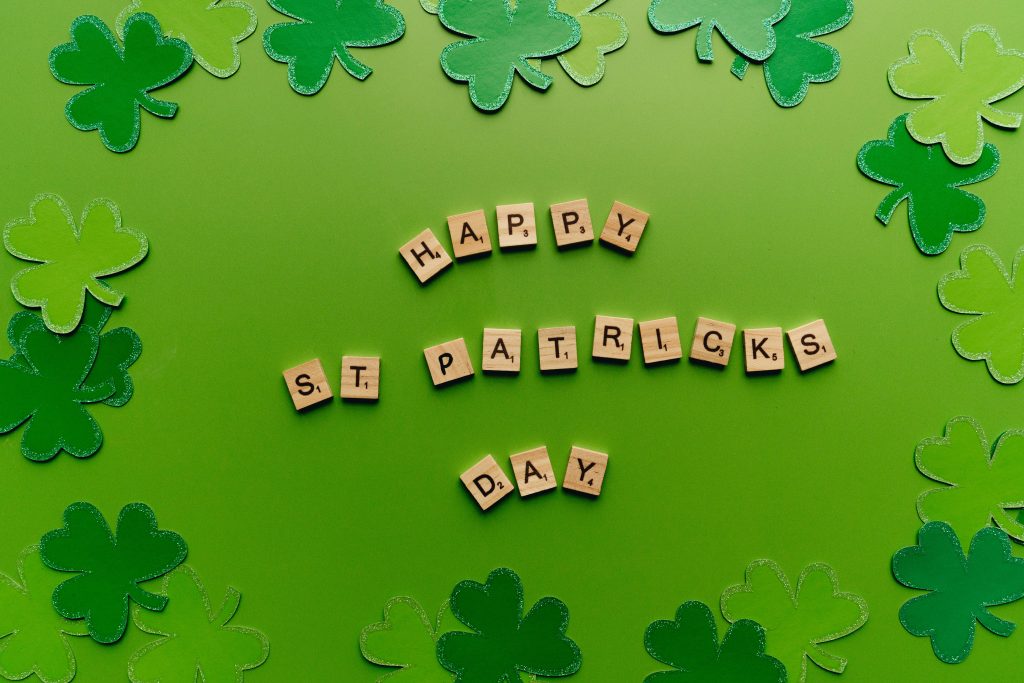
The single most recognizable element of St. Patrick’s Day, and Irish culture as a whole, is the color green. Ireland is known as the Emerald Isle because of the green landscape across the country. Much of this green scenery comes from shamrocks, a three-leafed clover. While four-leafed clovers are considered especially lucky, shamrocks are an immediately recognizable symbol of Ireland. Shamrocks do have a connection to St. Patrick’s lore. He is said to have used the shamrock’s three leaves to teach the concept of the Holy Trinity.
Another piece of folklore that is common and ubiquitous to Ireland is the leprechaun. Leprechauns are small, impish creatures with red hair and green clothes who play pranks on people. These pranks can be as playful or sinister as they see fit. Because of their distinctive clothes and appearance, they are perfect for children’s books. The most common prank is leaving a pot of gold at the end of a rainbow, another eye-catching image.
St. Patrick’s Day in Books and Audio
Mixing and matching these elements and any other aspect of Irish folklore can create a compelling story. No matter the genre, you can write a captivating story that showcases St. Patrick and Irish culture. St. Patrick’s Day books can truly be written for any demographic or age group. Whether a colorful children’s book or a swoonworthy Irish romance, there’s a potential book for everything.
Specifically focusing on audiobooks, St. Patrick’s Day is a perfect holiday for the format. Since most of these stories take place in or around Ireland, there is ample opportunity to play with accents. Irish accents are extremely distinctive, and they can add texture and layers to an audiobook recording.
When writing, focus on what sounds best to hear spoken aloud. This is true for any book, but especially one you want to convert into an audiobook. Doing so will make your book stronger so all audiences, whether they are reading or listening to your book.