
What Is the Job of an Audio Engineer?
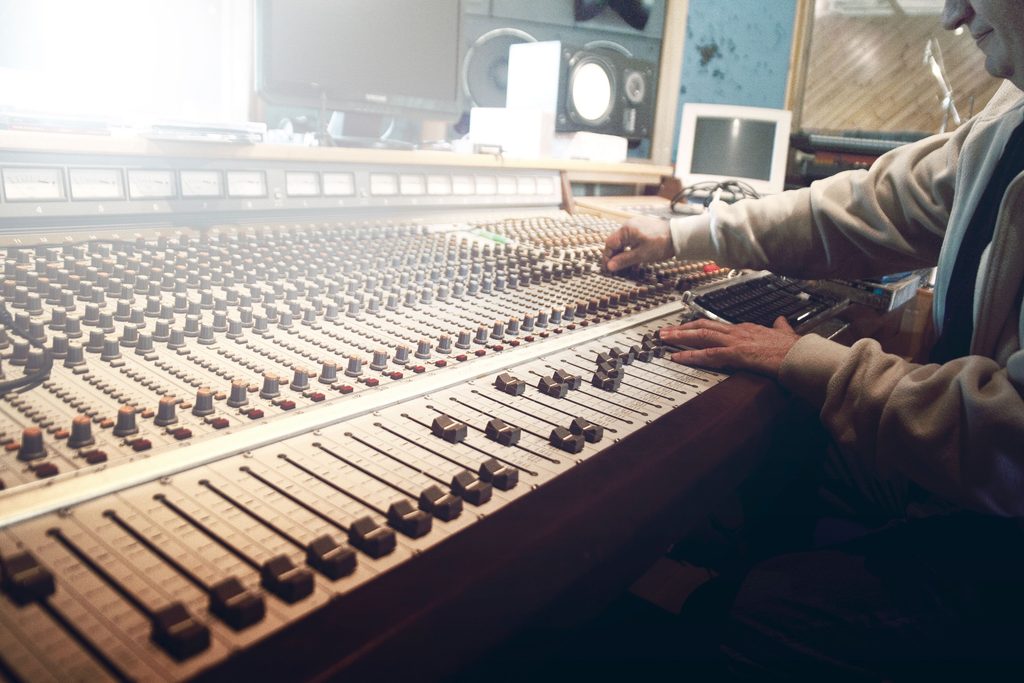
A Deep Dive Into the Role of an Audio Engineer in Producing an Audiobook
Everything that is professionally recorded needs someone behind the scenes to make it sound the best it can. That includes audiobooks. A lot of work goes into creating the best recording possible. When you work with Cloverly Audiobook, we ensure your finished audiobook sounds pristine.
The person who ensures the production runs smoothly is usually an audio engineer. This article will go over the job of audio engineer across the recording industry.
Basic Job Functions
While specific types of audio engineers have slightly specialized duties, these are their general functions. Each of these functions are often distinct phases that build to a polished finished product. The timeline of each project varies based on length, complexity, and budget. This applies to audio engineers who work both with audiobooks and in other segments of the recording industry.
Recording
The first piece of the puzzle is for audio engineers to coordinate and facilitate the audio’s recording. This means ensuring proper equipment setup, microphone, recording quality, and eliminating background noise or distractions. When there is a professional recording setup, the audio will be ready to take through the next stages of production.
Editing
When audio engineers edit the recording, they are manipulating the raw recording. This can include removing background noise, making sure different tracks line up, and cutting extraneous recordings. Through the editing process, the end result is a rough draft that shows the basic outline of the finished product.
Mixing
At the mixing stage, the audio engineer begins to finetune the audio. They can adjust audio levels, smooth out transitions, and overall balance the material. After this step, the recording will be nearly ready for release.
Mastering
The final stage in an audio engineer’s process is mastering. This is the final review to iron out any lasting wrinkles in the recording. In doing this, the engineer will ensure that the recording plays consistently across devices and is ready for release. Once the mastering is complete, the audio is ready for release on all platforms.
Other General Skills
There are several general skills and experiences audio engineers must have to be successful. This includes specific on-the-job training, schooling, technical experience, and mastering of recording and mixing equipment. Specific jobs require different skills and experiences, but these experiences are often helpful.
Different Types of Audio Engineers
While these job functions are generally applicable to most, there are different specific areas in which audio engineers work. They all use the various job functions in different ways to create their specific end product. There is some overlap between these roles, but they are often distinct careers.
Studio Engineer
A studio engineer is the type of audio engineer that most commonly works in the audiobook industry. These are the people who work in studios to record audio for music, film, television, audiobooks, podcasts, etc. Their function is to ensure that the actual recording of audio for future release is conducted properly. Studios provide a controlled environment for engineers to monitor.
Live Sound Engineer
Live sound engineers work primarily at live events, as opposed to in a studio. This includes concerts, theater, or any other in-person event. Their job relies on ensuring that audio quality is good for the attendees at the event. For example, they will likely monitor sound levels and mixing between various microphones and speakers. Ensuring high-quality audio at live events can also be helpful for recording the live event for future release.
Sound Designer
A sound designer works in general to design the actual sounds that are in recordings or productions. To do this, sound designers often record various sound effects, dialogue, and music to incorporate in the production. This includes both live events (like theater) and studio recordings (audiobooks, film, music, etc.).
Broadcast Engineer
Broadcast engineers’ work is like a mix of studio and live engineers. They facilitate the recording and mixing of live transmissions and broadcasts, such as television and radio productions. The audio they are recording is released live, but they are mixing the audio for audiences watching or listening elsewhere.
The Best Genres for Audio

A Guide to the Genres That are Well-Suited for Audiobooks
Any book can be an audiobook. In fact, audiobooks are becoming more popular than ever before. This is not a coincidence. People are listening to more and more audio content than ever before. The audiobook industry is booming, and authors with varying levels of experience are recording their books.
Even though any book can be a podcast, however, does not mean that every book should be one. There are undoubtedly genres and books that are more well-suited for being recorded as audiobooks than others. There are both fiction and nonfiction genres that fall into both categories. This article will look at the types of books that thrive as audiobooks.
Popular Fiction Genres and Poetry for Audiobooks
While any genre of fiction book can be an audiobook, there are some factors that make for strong candidates. The primary factors come down to the book’s tone, pacing, level of intrigue, and how it sounds spoken aloud. These factors can be in any genre, but this section looks at some specific genres.
Thrillers and Mysteries
Thrillers and mysteries are very common popular audiobooks because of how compelling they are. As page-turning as they can be in print, they can be equally or more intriguing in audio. These genres are known for their narrative drive that keeps the audience engaged. In these genres, there are often crimes and investigations that the protagonist is solving. When listening to well-paced thrillers and mysteries, the consumer will barely notice time passing.
Fantasy and Science Fiction
Fantasy and Science Fiction are other strong candidates for audiobooks. These books can cover a wide range of topics, but they are typically absorbing readers and listeners into new worlds. Sometimes, there are character and place names that can look unusual on the page but sound more natural. Listening to these stories, instead of reading them, can allow the listener to get fully lost in the world.
Poetry
Poetry can be an especially captivating choice for audiobook listening and recording. Lyrical writing often sounds the best spoken aloud, and a poetry audiobook provides that for anyone. Further, as individual poems are often shorter than traditional prose, this can allow for listening in snippets. Instead of dedicating a long time solely to listening to a story, someone can listen to a handful of poems.
Popular Nonfiction Genres for Audiobooks
In the nonfiction realm, there are further books that make great candidates for audiobooks. While some types of nonfiction (such as dense, academic texts and other resource materials) are not a fit, most are. The key elements of successful audiobooks are similar to fiction — tone, language, intrigue, etc.
Self Help and Motivational Books
Self help and motivational books are classic examples of nonfiction audiobooks. They provide for easy listening for consumers in need of a confidence or ego boost. These also make for perfect on-the-go listens that can provide emotional support anywhere the listener is. Further, since these books are naturally conversational, they can make for smooth listening for any consumer.
True Crime and History
True crime and history books are perfect for audiobook listeners looking to learn more about a given topic. These are often like a narrative story but more factually informative. Some people learn better by listening, and a history or true crime audiobook can accomplish that. Many popular podcasts also tell true crime and history stories; an audiobook is like a long-form version of a podcast.
Memoirs and Autobiographies
Memoirs and autobiographies tell the true stories of someone’s own life. When these are converted to audiobooks, they can be interesting to listen to a life story in the subject’s words. When the audiobook is a celebrity’s memoir or autobiography, it can be especially compelling to hear it directly from them. No matter the author, listening to someone’s story as they intended to tell it is powerful.
Start to a New Audiobook Today!
Whether you are a new listener or a seasoned pro, it is the right time to start a new audiobook. Find a book that draws your interest and listen to it at home, in the car, or anywhere else. Check out Cloverly Audiobook’s recent releases to find your next audiobook today!
The Role of Literature on Labor Day

How to Use Literature to Embrace the Spirit of Labor Day
As summer cools down and comes to an end, there is one final national celebration: Labor Day. Recognized on the first Monday of September, Labor Day is known as the unofficial end of summer. Even though there are several two weeks left of summer, schools are back in session and life returns to normal.
This year, Labor Day falls on September 7, and Americans around the country will honor workers and larger labor movements. Labor activists fought for improved conditions and higher wages for generations, and Labor Day is when this is celebrated.
With fall approaching, people may be shifting their interests and hobbies inside. Many traditional Labor Day celebrations are outside, but people can honor the spirit of the day from anywhere. In particular, anyone can celebrate Labor Day and its ideals through literature, both reading and writing. This article will look at the history of Labor Day and how to honor it with literature.
The Beginning of Labor Day
Labor Day was first celebrated in New York City on Tuesday, September 5, 1882. This first Labor Day celebration was spearheaded by a leader of the Central Labor Union. The goal of starting Labor Day was to provide a space to celebrate workers and their spirit. From the early days of America, workers across the economic spectrum had to advocate and fight for their rights. That was not an easy fight, and Labor Day is the ultimate celebration of that struggle.
As part of the inception and planning process, a blueprint was laid for the future. Parades were always an integral part of the plan for a national Labor Day. After President Grover Clevaland formally established a national Labor Day holiday in 1894, that was set in motion. Workers were always the backbone of the celebrations, which is why it being a formal holiday was so important. When workers have the day off, they can truly celebrate and feel honored by the day.
In the past nearly 150 years, parades, street fairs, and community events were always a landmark of Labor Day. The huge crowds who attended the first Labor Day parade set the precedent for generations to come. Parades, fairs, community gatherings, and barbecues are modern Labor Day staples.
The Literature of Labor Day — Fiction and Nonfiction
In the literary world, there are two broad types of books: fiction and nonfiction. There are exceptions, but most books fall in these two categories. From fiction to nonfiction to everything in between, books are a fantastic way to learn. All types of books can be useful learning tools to understand the spirit of Labor Day.
This is true for both reading and writing. When reading, the reader engages with the material before them and can process it as they please. Whatever topic they are reading about, they can analyze and absorb. There are seemingly infinite books to read for any topic, including Labor Day.
However, writing engages in a more active role, especially during a research process. Writers have control over what material is published and dispersed in the world, controlling the narrative. A successful writer will be an expert in the material and have a thorough understanding of all themes and messages.
Fiction vs. Nonfiction
Labor Day books and other works about the labor movement can come as either fiction or nonfiction. An individual’s choice between consuming or creating fiction or nonfiction is personal to them. Either way, there are countless ways to gain an understanding of the ethos of American workers. Even books that are not explicitly about workers or labor can be enlightening as Labor Day reading.
Fiction is a form of creative writing that comes from the author’s imagination. However, that does not mean there is no basis in reality. On the contrary, some of the most engaging forms of fiction are rooted in real life and universal themes. When writing a story about Labor Day or workers at large, these themes can be obvious or more indirect. It is up to the author’s discretion to share themes through their writing.
Nonfiction is still creative, but the text is based in direct reality. Common genres of nonfiction are biographies, history, philosophy, self help, or other educational texts. This can be a more direct way to share messages about Labor Day and its larger themes.
Ultimately, Labor Day is meant to honor the strength and power of workers and the working class. You can choose to celebrate any way that sees fit, and literature can be an unexpected way to do so. And remember, if there is no book that piques your interest, you can always write your own!
How to Make a 21st-Century Query Letter

The Old-School Query Letter and Its Modern-Day Equivalent
You pour your whole soul into writing the book of your dreams. That is probably the most creatively rewarding part of the entire process. However, you cannot ignore the practicalities of the publishing and marketing side of things. This might not come to authors naturally, but it is still crucial to advocate for yourself as a writer. That is where the traditional query letter would come in use.
Authors write query letters to send to industry professionals to advocate for themselves and their book. In particular, a query letter was a traditional first step in getting a new author’s book published. In short, it introduces you, your work, and why they should publish your work. Query letters, however, have become somewhat outdated in the age of social media and online publishing.
Even though query letters can be outdated, there is still value in learning about them. This article will explore the historical and modern role of query letters in the publishing world.
What Goes Into a Query Letter
Before understanding the modern equivalent, it is important to know what goes into a regular query letter. As with nearly everything you write, there is not a single formula for writing a query letter. However, there are some standard pieces of information that are typically included in them.
Introducing Yourself to the Reader
The first step in writing a query letter is to understand the audience you are writing to. The potential audience for a query letter can be a publisher, editor, agent, etc. This can dictate the style or tone you approach the letter with.
When introducing yourself, you want to lay the groundwork for the rest of the letter. You do not need to get into the specifics of your life or work yet, just the basics. Let the reader get a sense of why you are writing to them. More details will come later in the letter.
Basic Details of Your Manuscript or Book
After introducing yourself, you should tell the reader of the letter about your book. This is a majorly important section because it tells the reader why they should invest their time in this book. For most people in the industry, the work speaks for itself, so make sure you sell it well.
You do not have to give too much away or get into too many details — just provide a basic summary. This will be similar to a future blurb or other marketing material. Make sure your synopsis is compelling, accurate, and impactful. You want to compel the reader to read the whole thing and help you ultimately publish your book.
More About Yourself
Now that you summarized the book at hand, it is time to talk more about yourself. This is where you can let your individualities as an author and person shine. Similar to what will be in your eventual About the Author, you should mention your basic background.
Your education, work history, or notable personal achievements are a great place to start. Feel free to include anything that makes you stand out from other writers. Sharing your background lends more credibility and context to your work. Depending on the type of book you are sharing, your background can be especially important.
Writing Samples, Excerpts, and Previous Work
Finally, you want to end your letter with some sample of your writing. If you are writing a query letter, you likely have a manuscript drafted, or at least outlined. It is great to include this relevant material to give the reader a sense of your actual writing. If you do not have that yet, you can include past writing. Make sure what you submit reflects your style and the ultimate quality of your writing.
Bringing the Query Letter Into the 21st Century
With that in mind, it is time to delve into what makes a query letter so outdated. In the modern age, technology and social media have made the query letter somewhat obsolete. They still have their place, especially with old-school publishers, but there are more ways to share content than ever before.
Some of the most influential and popular modern-day authors achieved their success by starting out without traditional publishers. Getting your work published through legacy companies is no longer the only path to success. You can self-publish, work with smaller, independent companies, or any mix of the two.
Working with Cloverly, we provide you with all the resources you need to successfully self-publish your book or audiobook. No query letter is required or accepted at Cloverly. Instead, once you request your free production kit, our team will be in touch about directly submitting your manuscript. Once approved, you will be able to begin your journey to becoming a published author. Our team will guide you through the process from proofreading to cover art and beyond.
What to Look for in a Summer Beach Read

Identifying Some of the Elements of the Perfect Beach Read
Summer is the perfect time to check off books from your to-read list. Whether enjoying the great outdoors with a book in hand or staying cool inside, there’s something for everybody. You can read at the beach, by the pool, or even while traveling to a summer vacation.
When looking for the perfect beach read, no two readers will have exactly the same taste. Some prefer lighter reads, while others like to get lost in a gripping story with the waves crashing behind them.
Even though the definition of a “beach read” can be subjective, there are some common elements. This article will look at what goes into some of the most popular summer beach reads. Keep in mind, this is a general guide, and you decide what makes the perfect beach read for you.
Genres to Look Out For
Any genre can make for a compelling summertime read. However, the more popular beach read genres tend to be more populist and plot-focused. The beach or pool is not necessarily the best environment for a thought-provoking history lesson. That is, unless you want it to be. However, most will find summertime enjoyment in mystery, crime, romance, science fiction, horror, or thrillers.
When picking a genre for your next beach read, think about what you want to read at the time. Feel free to branch out to any genre you please. But, these more audience-friendly genres will be easy, engaging reads for the widest range of audiences. You do not have to sacrifice quality when opting for a more populist genre. Plenty of books are critically acclaimed and make for excellent beach reads.
The content of the book is just as important as the genre. As always, you can read any book you want at the beach, but some content is more suitable. When choosing a book, read the plot summary and assess if that fits the mood of your beach day. That can change day to day, so you can keep your options open.
Summer Reading for School
Sometimes, people’s summer reading is not entirely up to their discretion. Of course, this is most often students on their summer break. Between their other summer activities, these students have to find time to finish their required reading.
One way to finish these assignments is to read while enjoying the great outdoors. Whether this is by the pool or on the beach, students can enjoy reading without sacrificing the best of summer. However, some books or assignments are not suited for outdoor reading. As such, these should be completed indoors, but always balance that time with outdoor adventures!
What Format to Read at the Beach
After you figure out what book to read at the beach, your next step is choosing a format. Most books are published in print (hardcover and paperback), digitally (eBook), and as an audiobook. Each of these formats have a place for beach reading.
Paperbacks are the most common format to read books at the beach. These can be either mass market or trade paperbacks. Mass market paperbacks are typically smaller than trade paperbacks, but both are comparably portable. Either make for a convenient and affordable way to read on the beach or by the pool.
Hardcover books are less portable because of the stiffer binding. As they are not flexible, it takes more physical effort to read hardcover books. However, if there is a book you want to bring to the beach that is only hardcover, bring it! Just be aware of the potential limitations and higher price point.
Digital eBooks are best for people looking for the most portable and diverse option. eReaders can pack multiple books on the go, giving the reader more options. An eReader that can be used in the summer heat gives you an entire library at your fingertips.
Audiobooks are becoming increasingly popular. You can download multiple audiobooks for your summer beach day. Audiobooks are great for people looking to relax and rest their eyes while taking in an audio story. If you are looking for new audiobooks to listen to this summer, check out Cloverly Audiobook’s catalog of recent releases.
The Length of a Beach Read
Your beach read can be as long or as short as you want. Longer books will inherently be bigger and thus more cumbersome to bring to the beach. Shorter books can easily fit in your bag. If you read a book that is too short, however, you might finish it before the day is over. Plan accordingly to make sure you have enough reading material for the entire day.
Reading at the beach or by the pool this summer allows you to get the best of both worlds. No matter what you read, you can grow your literary sensibilities while enjoying the summer sun. The only person who knows the best beach read for you is you.
Books for 250 Years of American History
Honoring America’s History Through Literature on Its 250th Anniversary
Every Fourth of July, Americans around the country celebrate the true American spirit. It was on July 4, 1776, that the Founding Fathers approved the Declaration of Independence. This document announced the intention of the American colonies to split from the oppressive ruling power of Great Britain. The American Revolution quickly followed, in which the American colonies fought for their freedom. They won the war, and the rest is history.
Now, exactly 250 years later, people all over the country are celebrating the continued legacy of the American spirit. Every Independence Day is a cause for celebration, but this year is especially potent. Whether you are grilling, watching fireworks, or spending time with loved ones, the Fourth is a special day for Americans.
An under-appreciated way to celebrate American history is through literature. All sorts of books can deepen our collective understanding of this country, both fiction and non-fiction. This article will guide you on your journey to embracing the impact of Independence Day through the literary world.
History and Historical Fiction
When diving into the literary world, there are two larger categories: fiction and non-fiction. Within those parameters, there is nuance and individual differences. Obviously, as a general rule, fiction applies to made-up stories, and non-fiction is about real things.
Historical works can also fall within these two categories. Both are valid ways to embrace America’s history with literature, with their own unique features. This all applies to both readers and writers of historical books.
Non-Fictional Works of Historical Literature
Non-fiction is the most traditional form of literature to read and write to learn more about history. In all its creative endeavour, non-fiction works teach both the reader and writer about the world. These can take the form of historical biographies, accounts of events, memoirs, reference materials, or anything else that is factual. The most important thing is that everything is true and based in fact.
When writing a non-fiction historical book, the most important thing to do is research the subject. Who would want to read a book written by someone who gets information wrong? You can research online, in books, through interviews, or anywhere else; just do your homework. Once you have a substantial understanding of the topic, you can begin the actual writing process. This can start with an outline, a storyboard, or free writing.
For readers who embrace historical non-fiction, they are drawn to books about their favorite subjects. Everyone has their own individual tastes, but history is crucial to understand. In light of America’s 250th birthday, it becomes even more important to learn about the country’s past.
Fictional Works of Historical Literature
Historical fiction carries some notable similarities to non-fiction. However, fiction tells a story that is not true; it comes from the author’s imagination. With historical fiction, the author takes a real-life era or event and writes a fictional story about it. These books can be any genre in the literary canon, so long as real-life history is incorporated. There is always a balance between the fictional elements and the things based in reality.
As a non-fictional writer, only you know your specific process. However, research is key to creating a powerful and enduring historical fiction. Once you have the research done, the process will follow any other fictional story’s creation.
Incorporating your imagination into history is a powerful creative tool for readers. Some people might have difficulty focusing or absorbing historical non-fiction, so fiction is where they will be drawn to. When searching for a historical non-fiction to read, readers can use their favorite eras, events, or authors as a start. Their imagination can run wild and teach them about history.
Spread Patriotism Through Literature and History
For America’s 250th birthday, understanding the history of this country is crucial. If you are reading or writing this Fourth of July, share your passion for history and literature with others. People trust and rely on the opinions and motivation of others when interacting with culture.
As both a writer and a reader, promote any historical books you have read to friends and family. You can even share your appreciation of history with young readers. Audiobooks are one additional way to spread historical stories with others. As a highly accessible form for reading, audiobooks can reach the entire potential audience who process audio differently.
What Goes Into an “About the Author”?

Writing Your Author Biography for Your First Book
After you write your book, your writing process is not quite finished. After the editing process, preparing your book for publication, there is one last thing to finalize: your About the Author. Your About the Author, or ATA, is the short biography about yourself for your book’s readers. Once you have a solid ATA, your book will be fully ready for publication.
Every ATA is different because they are tailored to their author’s individual personality and life. Therefore, there is not a one-size-fits-all guide to writing any author bio. This article will serve as a basic framework for how to write your ATA. There is no right or wrong way to do it, just make it a reflection of yourself.
The Technicalities and Formalities of an ATA
Even though there is not a singular template for an ATA, there are some technical aspects to consider. These are industry norms, not strict requirements, so use your discretion when writing. You know the best way to convey your life through a short writing sample.
The first thing to note going into writing an ATA is the length. So you know what to plan for, an ATA should not be more than one printed page. This provides enough space for sharing the important parts of your life without going overboard. Knowing the general length parameters allows you to balance the parts of your ATA. Grab any book off your shelf and you can refer to that ATA to get an idea of the length.
After knowing the length, you can start thinking about the actual writing. Your ATA should be written in complete, proper sentences; avoid bullet points or lists. In the same vein, write your ATA from a third-person perspective. Even though you are writing about yourself, let the reader immerse themself in learning your story. This will create a professional ATA that fits in with the industry norms.
Finally, the last thing you will notice in an ATA is the author’s accompanying photograph. This gives the reader a face to picture when learning about their life. Your headshot should be high resolution, clear, and only feature you. You can take the photo at home or use one you already have, just make sure it is current.
What to Write About
When it comes to the substance of an ATA, there are many directions you can go. These are just some suggestions and common information to include. The key for everything is to not overshare sensitive information about your life.
Firstly, you can write about your family and personal life. To avoid oversharing, this can be your hometown, where you live now, or if you have a spouse or children. This shows the reader that you are a real person with lived experiences. Similarly, you can include information about your favorite pastimes or hobbies. You do not want to bore the reader, so limit it to your most defining passions.
Secondly, you can write about your education or work history, especially if it is relevant to the book. This gives you some level of authority to make the reader trust your writing. Your academic history can be any schooling you completed, degrees you obtained, or certificates earned. Work history should be limited to long-term careers or important jobs in your life. Do not include too much information because it can bog down the entire ATA.
Finally, definitely include any of your previous writing credits. Doing this is an easy way to build a reader base because it allows readers to find your other works. If this is your first book or writing project, you can add this for your next book. This is a simple way to convey your writing and literary experience.
How to Get the Most Out of Your ATA
While your new ATA is for the book you are currently writing, it has other practical uses. Most directly, your ATA can be reused for future books you publish, including audiobooks. Even if you make tweaks, having a uniform ATA makes your life a lot easier. If you have a personal or professional author website, you can use your ATA there, as well.
For the book at hand, your ATA can be used across marketing, social media, and other events. You may be asked to provide an author bio for book signings, media appearances, or other events. You can use some or all of your ATA for those purposes. This gives you a consistent identity across the board.
Since you will use your ATA multiple times and in different ways, make sure you put care into it. It is not always natural to write about yourself, but you will be well-served to try your hardest.
Your Second Book: Growth as a Writer

How to Use Your First Writing Experience to Become Stronger
Your first time writing a book can be immensely scary. The thoughts will start racing around your brain. You progress through the writing process, putting your thoughts into words. When this is your first writing venture, that could be scary. But, at the end of the process, you did it; you wrote a book.
If you enjoyed your experience writing and publishing your debut book, what comes next? Do you want to continue your life as an author? If that is the case, you will want to start writing as soon as an idea comes to you.
Whether you want to write a direct follow-up to your first book or something entirely new, your writing will evolve. You can use your first experience to elevate and advance your writing in all aspects. The tips and tricks from your first book can be invaluable when writing your second. This article will discuss some of the ways your first book will inform your second book.
Elevate Your Writing Style
When you write a book for the first time, you are new to it. Some debut books are stellar and regarded as literary classics. No matter how good someone’s first book is, their style will evolve with experience. This evolution might be of the same quality, but it is still a change. These changes can be about content, style, themes, age range, or anything else. It is the natural progression of a writer’s journey.
For your second book, do not shy away from honing your writing, whether in the same or a different genre. You do not want your writing to become stale or static over time. If you keep your writing fresh from the very beginning of your journey, you are on track for success. Never sacrifice your authenticity — learn more about yourself as a writer as you gain experience.
Embrace and Listen to Your Audience
While we often write for ourselves, as a published author, you are also writing for the general public. Without these readers, your book will stay private to you. Gaining this audience is one of the most satisfying parts of being published. You get to send your book into the world and know that people are reading it.
Do not be afraid to embrace your newfound audience. These are the people who will have the most honest and valuable feedback to your work. Feedback from those close to you are important for personal reasons, but the public is different. Your new audience are people who discover your writing because of what you write. As such, their feedback is worth listening to.
You do not want to repeat yourself too much, just lean into what best works about your writing. This is something you can learn from learning from and interacting with your reader. They are the ones who like your writing and will come back for more.
Learn from Other Authors and Industry Folks
Besides your readers, you will meet many people in the publishing industry who can help you along your journey. From publishing your first book, you will be able to hone your networking skills. The people you meet are those with experience, likely more than you have. Their experience will be invaluable in giving you advice. You might even learn things about writing and publishing that you had never considered.
From fellow authors, they can read your work and offer their feedback. As authors themselves, they understand what makes for a good book. Likewise, you can give them feedback. This cycle can be an invaluable tool in networking and building close relationships with other writers.
You will also meet publishing executives, illustrators, editors, and others while publishing your first book. While offering different types of advice, these people can help you significantly. They can give you advice on marketing, notes on your manuscript, information about metrics, and general guidance. Fostering these relationships will help you immensely during the publishing process of your second book when you know the ropes.
Improve Your Marketing Going Forward
After your book is published, it is time to market the book. When you publish your first book, this can be a daunting experience. During that marketing process, you will learn the how, where, when, and who of book promotion. For first-time authors, it can be a shock.
When approaching your second book’s promotion, you will have a headstart from your prior experience. Publishers will often give you a preliminary boost — i.e., social media posts, a website, promotional materials, press releases, etc. However, it is incumbent upon you as the author to get your book in front of the masses. There can be a learning curve when you start marketing your first that eases with the second.
It is crucial to use and analyze all your experiences from writing and publishing your first book. If you are interested in writing more books, you will learn immensely from this. Your debut book was only a launchpad for the rest of your life as an author.
The Tools to Tackle Imposter Syndrome

Understanding Imposter Syndrome and the Tools to Mitigate It
In your life, professional and personal, there are times when you might feel like you do not belong. This can be from any source, but it makes you feel like an intruder in your life. You might even doubt your abilities and skills that got you to where you are today. Most people know this feeling as imposter syndrome, and it is very common in any field.
Writers are in a uniquely personal art form, but there is still a larger community. It is only natural to compare yourself to others and their writing. Comparing yourself to others is a brewing ground for imposter syndrome. Even if you are an accomplished writer, you can feel like an outsider. This article will review all about imposter syndrome in the literary world.
The Big Picture of Imposter Syndrome
As mentioned, imposter syndrome (or imposter phenomenon) is when someone feels like an imposter in their environment. Often, this will be at work or school and stem from comparing yourself to others. People with imposter syndrome feel that they are not worthy of being in their space. They see others’ successes and can feel inadequate. However, people can internalize their imposter syndrome in different ways.
In the publishing and literary worlds, this often presents as insecurity about one’s writing. For example, if you are a moderately successful author, you may compare yourself to bestselling authors. Everyone has their own version of success, but sometimes other people’s success can intimidate you. You might also feel inferior because other people have more formal training than you.
Who Is Most Likely to Have Imposter Syndrome?
While anyone can experience imposter syndrome, there are certain groups of people who can be more sensitive to it.
Often, this is based on identity or membership in a specific group, especially when it is a minority group. Being a minority among the larger majority group can give someone imposter syndrome. Some of these groups are minorities in race, nationality, ethnicity, gender, sexual orientation, age, and class. However, just belonging to one of these groups does not mean you must feel imposter syndrome.
Outside of identity, people’s personalities can affect their susceptibility. People who experience anxiety in other aspects of their life are, naturally, more likely to be anxious about fitting in. These already-anxious people could easily feel like they do not measure up to others’ expectations of them.
The final factor that often plays a role in imposter syndrome is one’s experience level. People who are new to an environment are more likely to be unsure about their place. When others have been there longer, it can be intimidating to join an already-established group. This source of imposter syndrome can hopefully subside as the person gains more experience in the field.
Tackling Imposter Syndrome Head On
Just because you suffer from imposter syndrome does not mean you have to struggle with it. There are many ways to mitigate the uncertainty and discomfort that comes with imposter syndrome. This is a sample of potential solutions, but the sky’s the limit with managing your mental health.
The biggest tactic to manage imposter syndrome is to practice mindfulness and intentional thinking. Of course, you cannot completely control the places your mind goes, but you can try to practice it. Various forms of meditation, yoga, and breathing exercises can center you. This might not completely change your mindset, but it can help open your mind. Self-care is at the root of each of this mindfulness.
Try to focus your thinking on the logic and facts of the people around you. Everyone started somewhere, including the successful people who intimidate you. You deserve to be in the space you are in — do not let imposter syndrome let you think otherwise. Nobody knows your worth better than you. Breaking down your imposter syndrome can reveal the logical fallacies and truth of your imposter syndrome.
Further, there are different metrics of success for everyone. As an author, you might have peers who win awards or are national bestsellers. However, your writing can have different aspirations. You could also strive to achieve that kind of success, but recognize that you do not have to.
There are always ways to become more confident and self-assured. Do not be afraid to seek out resources or professional help to support your journey. You are never alone, and your friends and family are also there to support you.
A good publisher will also guide your journey to overcome imposter syndrome. Here at Cloverly Audiobook, we work to make sure you feel like you belong.
Why to Share Your Story Through Writing

The Various Ways to Write Autobiographically and When to Use Them
No matter what genre you are writing, your book will contain pieces of your soul. Your personality will be in everything you ever write. When you write about your own life experiences, however, you are sharing even more of yourself to the reader. People seek out autobiographical works because of the humanity in them, so that should always be at the forefront.
There is no one correct way to incorporate autobiographical elements into your writing. Some people write straightforward autobiographies, while others channel their life into works of fiction or mix genres. You are the only person who can dictate how to share your story with the world. This article will help you decide the best creative outlet for your autobiographical writing.
Books Directly About Your Life
The most direct way to write about your life is through a book about your own life, or an autobiography. A biography is a book about someone’s life, but adding the auto– prefix makes it about your own life. When you write this kind of book, you are telling your story as only you can tell it. There is no one else telling your story for you; you are in control of the narrative.
A standard autobiography is a comprehensive account of one’s life. The scope is generally wide and covers many years and situations in one’s life. You still share interesting stories from your experiences, but it shows a large section of your life. When someone’s whole life has been a series of worthwhile stories, this is a great option. Plainly telling your story without any curation or editorializing can be powerful for the right person.
However, within the general genre of autobiography, there are some subgenres. The most prominent one is a memoir. When writing a memoir, the author tailors what is shared to hone in on a specific theme or time period. Rather than share the big picture of one’s life, a memoir is more selective. It builds to a larger thematic purpose that still teaches the reader about the author, just not everything about them.
Some topics that a memoir can encompass include careers, notable historical moments, family matters, or any specific recurring events. Authors who feel that their most important contribution to the autobiographical world is thematic should write a memoir. Knowing your personal history, strengths, and weaknesses is crucial for being a successful writer, especially of autobiographies.
Essays or Short Stories
Sometimes, authors find it easier to write short-form essays or short stories rather than one longer chronological narrative. This can be another creative autobiographical outlet. Writing essays or short stories allows you to jump around various topics and themes while telling your story. Each can often be read independently of one another. It still teaches the reader about your life and experiences, but more as a patchwork.
Writers who write short-form pieces may not even want to publish their work as a book right away. Whether starting off with a blog, newsletter, or personal diary, you could accumulate material over time. With a collection of material ready to go, you can curate the writing into a collection to be published. This allows you to write as a creative outlet without being pressured to publish immediately. Follow your heart and write how you see fit.
Autofictional Books
A less direct way to write about your life is to incorporate elements of it into fictional works. This is also known as autobiographical fiction, or autofiction. Autofiction is a creative way to process and write about your life without having to specify that. It provides a layer of protection for authors writing about particularly vulnerable emotions or experiences.
Often, elements of your reality will seep into your fiction without realizing it, but this is more intentional. Fictionalizing elements of your life gives you material to write about and reference, even if you keep that private. The people in your life never have to definitively know the reality behind your book. This is one way to rewrite your history, share valuable lessons, and live out your fantasies through literature.
Poetry and Songwriting
The most creative and abstract way to write about your life is to write poems or songs. Anyone can write poetry and make it personal and true to life. It is almost harder to write lyrical prose without any of your life in it. All writing comes from the soul, but poetry and songs are especially revealing. There are people who channel their emotions best through this kind of writing, and they can publish these in collections. Doing so will allow others who are similarly lyrical to connect to the author.
Publishing your autobiographical work can be intimidating. It is a direct piece of yourself that you are putting out to the market. Your writing deserves to be out there, and readers are always looking for new books to read. If you have already published an autobiographical work, consider converting it into an audiobook. At Cloverly Audiobook, we will work with you to turn your book into a compelling, well-produced audiobook. This will allow your story to reach the biggest possible audience.