How to Create a Storyboard and Tailor It to an Audiobook
Almost every successful piece of media relies on a solid structure. From the flow of the plot to fleshed-out characters, the foundation of your story is of the utmost importance. One way to build the bones for a strong story is making a storyboard.
Your storyboard will be highly individualized to your needs as a writer. A storyboard can be specifically tailored with an ear for audiobooks. The elements of a storyboard can vary greatly, but this guide will highlight some of the most common and helpful components to consider.
Overview of a Storyboard
The simplest form of a storyboard is one that uses physical paper to organize your story. Starting from the beginning, each element of your story can be written on individual pieces of paper and arranged. These pieces of paper are often index cards or Post-it notes. Once you have all your elements arranged, you will see a big-picture overview of your story. You can make any adjustments as needed.
The ultimate goal of a storyboard is to organize your thoughts before (or after) you start writing. You can have the germ of an idea, but a storyboard will assist in getting that on the page. That is why having a consistent format and structure is especially helpful.
The Components of a Storyboard
Your personalized experience of making a storyboard is guided by your needs. That being said, there are common elements often included in storyboards: plot, characters, and drawings. Use these as needed, or not at all, but make sure you utilize the process to your advantage. Nothing in your storyboard is final, just a form of brainstorming and organization.
Segments of Plot
Your book is nothing without the plot. Even for nonfiction works, the plot is the guiding force of the text. That is why putting plot points on your storyboard is crucial and almost always included in storyboarding. Your plot is important to keep readers engaged and coming back for more.
When storyboarding, write as many plot beats on your cards as you think is necessary. Then, arrange them in chronological order to create a timeline of your story. Even books that are not told chronologically can use this to keep track of the story. You will be able to visualize the entire plot of your book, which you can then amend as needed. Simple stories and complex tales can equally benefit from storyboarding their plot beats.
Character Descriptions
What is your story without your characters? Your plot cannot possibly move along without your characters’ involvement in the story. Having distinct characters will only help your book.
In using your storyboard for character development, each of your main characters should get a dedicated card. On this sheet, you can put any of your character’s traits on this card. Some examples are background details, motivations, relationships to other characters, and other key details. You can even put potential quotes or examples of what their dialogue may be. Put whatever information most defines your characters.
Sample Drawings
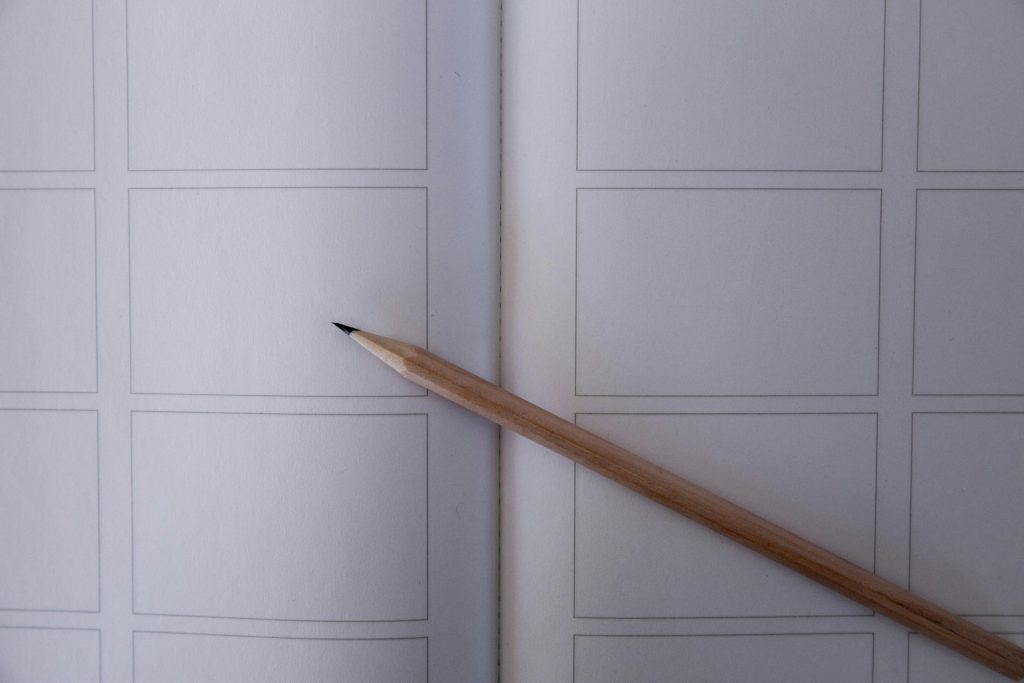
Even non-illustrated books can use pictures in the storyboarding process. When you include drawings in your storyboard, it serves several purposes. Firstly, it helps you visualize the story you are telling. This can help your writing because it shows what you are trying to convey with your writing. Another use of these storyboard illustrations is that it can develop your own vision of the story. Finally, it can also serve as inspiration for your book’s final illustrations or cover art.
Audio-Specific Considerations for Storyboarding
Often, your audiobook is a conversion of a previously published book. If you know you want to produce an audiobook, or plan to go directly to audio, you can tailor your storyboarding to the ear.
Audiobooks do not vastly differ from traditional books and are often exact narrations. However, when writing with audiobooks in mind, always focus on how something may sound. In storyboarding, that would mean including as much verbal content as possible. Dialogue, in particular, is ripe for storyboarding in this context. Doing so would allow you to easily read important lines to make sure they sound natural. You can also use specific examples of prose to make sure it flows. All storyboards are custom-tailored to your writing process, and audio-focused ones are no exception.
Basic Three-Act Structure
Across media, most narrative stories utilize a three-act structure, broadly encompassing the beginning, middle, and end of the story. This is not a strict rule, but a general guideline that can be helpful, especially when storyboarding.
The first act should establish the characters of your story and set up the stakes. This is a great opportunity for world building, immersing the audience into the world of your book. The further away from reality your book is (fantasy or science fiction, for example), the more world building you need. This section should not be too long, as long as everything is set up for the rest of the story.
The second act is the large chunk in the middle of your story. This is where the majority of the action of your story takes place. All the groundwork you laid in the first act comes to fruition here. Depending on the genre, this does not necessarily have to be traditional action sequences. It can be emotional or psychological action that brings the threads of your story to a close.
The third, and final, act is the conclusion of the story. This section does not have too long either, just long enough to wrap up everything in the aftermath of the climax. You do not want your readers to feel like the story is dragging on long after the conflict is resolved. How you conclude your characters’ arcs is completely up to you. Keep in mind the overall story being told and if these characters will appear in future stories.
Make Storyboarding Work for You
Your storyboarding process does not have to follow any guidelines. Use it however you see fit. You can even make a storyboard after finishing a first draft. To do so, you transfer the material you have already written to the storyboard so you can visualize the big picture of your work. That is a great way to edit and revise for future drafts.
Nobody ever has to see your storyboard; it is just for you. No one will be able to judge your work because of how you storyboarded it. The point is to make your book as strong as possible, so personalize the process to your writing style.